Building Blocks of English: Exploring Latin and Greek Vocabulary
English, a language spoken by billions worldwide, boasts a vocabulary so vast and nuanced that it can seem daunting to master. Yet, beneath the surface of everyday conversation lies a remarkable secret: a significant portion of English words are built upon foundations laid by ancient civilizations. Specifically, the rich linguistic heritage of Latin and Greek serves as the bedrock for an enormous percentage of our lexicon, offering a powerful key to understanding, remembering, and even expanding our English vocabulary. This article delves into the profound influence of these classical languages, exploring how their building blocks have shaped the very fabric of English and providing practical insights for learners and enthusiasts alike.
The Pillars of English: Latin and Greek’s Pervasive Influence

It’s not an exaggeration to say that Latin and Greek are fundamental to English. While Old English (Anglo-Saxon) forms the Germanic core of the language, centuries of Norman French (itself heavily influenced by Latin) and direct borrowing from Latin and Greek have profoundly altered and enriched its vocabulary. Estimates vary, but a substantial percentage of English words, particularly those in academic, scientific, medical, and legal fields, trace their origins back to these classical tongues. Consider the sheer volume: linguists estimate that anywhere from 60% to over 80% of English words have Latin or Greek roots, depending on the segment of the vocabulary being analyzed.
A Tale of Two Languages: Their Distinct Contributions
While often discussed together, Latin and Greek have contributed to English in slightly different ways, each leaving an indelible mark:
- Latin: The Language of Empire and Law. As the language of the Roman Empire, Latin became the lingua franca of administration, law, and scholarship across Europe. Its influence entered English primarily through French after the Norman Conquest of 1066, and directly through the Renaissance and the Church. Latin roots often lend a formal, precise, and often scientific or legal character to English words.
- Greek: The Language of Philosophy and Science. Ancient Greek, the language of groundbreaking philosophers, scientists, and artists, provided the vocabulary for abstract thought, scientific discovery, and specialized terminology. Greek roots are particularly prevalent in academic disciplines, medical terms, and the nomenclature of the natural world.
Decoding the Lexicon: The Power of Root Words

Understanding Latin and Greek root words is akin to acquiring a master key for unlocking English vocabulary. Instead of memorizing individual words, learners can begin to recognize patterns and deduce the meaning of unfamiliar words based on their constituent parts. This approach transforms vocabulary acquisition from a rote exercise into an analytical and empowering process.
Common Latin Roots and Their English Descendants
Let’s explore some ubiquitous Latin roots and see how they manifest in English:
- ‘duc’ (to lead): This root is found in words like:
- Educate: To lead out, to draw forth knowledge.
- Conduct: To lead or guide (e.g., a conductor of an orchestra).
- Induce: To lead into, to persuade.
- Aqueduct: A channel to lead water.
- ‘scrib/script’ (to write): This root gives us:
- Scribe: One who writes.
- Inscribe: To write upon.
- Describe: To write about.
- Manuscript: Written by hand.
- ‘port’ (to carry): This root is fundamental to:
- Transport: To carry across.
- Import: To carry in.
- Export: To carry out.
- Portable: Able to be carried.
- ‘vid/vis’ (to see): This root is the source of:
- Vision: The act or faculty of seeing.
- Evidence: That which is seen or proves a point.
- Visible: Able to be seen.
- Advise: To offer one’s sight or opinion to someone.
Prominent Greek Roots Shaping English Terminology

The influence of Greek is equally profound, particularly in specialized fields:
- ‘bio’ (life): This root is central to:
- Biology: The study of life.
- Biography: A written account of a life.
- Antibiotic: Against life (referring to microbes).
- Biodegradable: Capable of being broken down by living organisms.
- ‘graph’ (to write, to draw): This root forms words like:
- Photograph: Light drawing.
- Autograph: Self-written signature.
- Graphology: The study of handwriting.
- Telegraph: Distant writing.
- ‘logy’ (study of): Often appended to other roots, this suffix indicates a field of study:
- Psychology: The study of the mind.
- Geology: The study of the Earth.
- Sociology: The study of society.
- Anthropology: The study of humankind.
- ‘meter’ (measure): This root is essential for:
- Thermometer: Measure of heat.
- Barometer: Measure of atmospheric pressure.
- Speedometer: Measure of speed.
- Geometry: Earth measurement (its original meaning).
Case Studies: Latin and Greek in Action

The impact of these classical roots is evident across various domains of English usage. Let’s consider a couple of specific examples:
Case Study 1: The Medical Lexicon
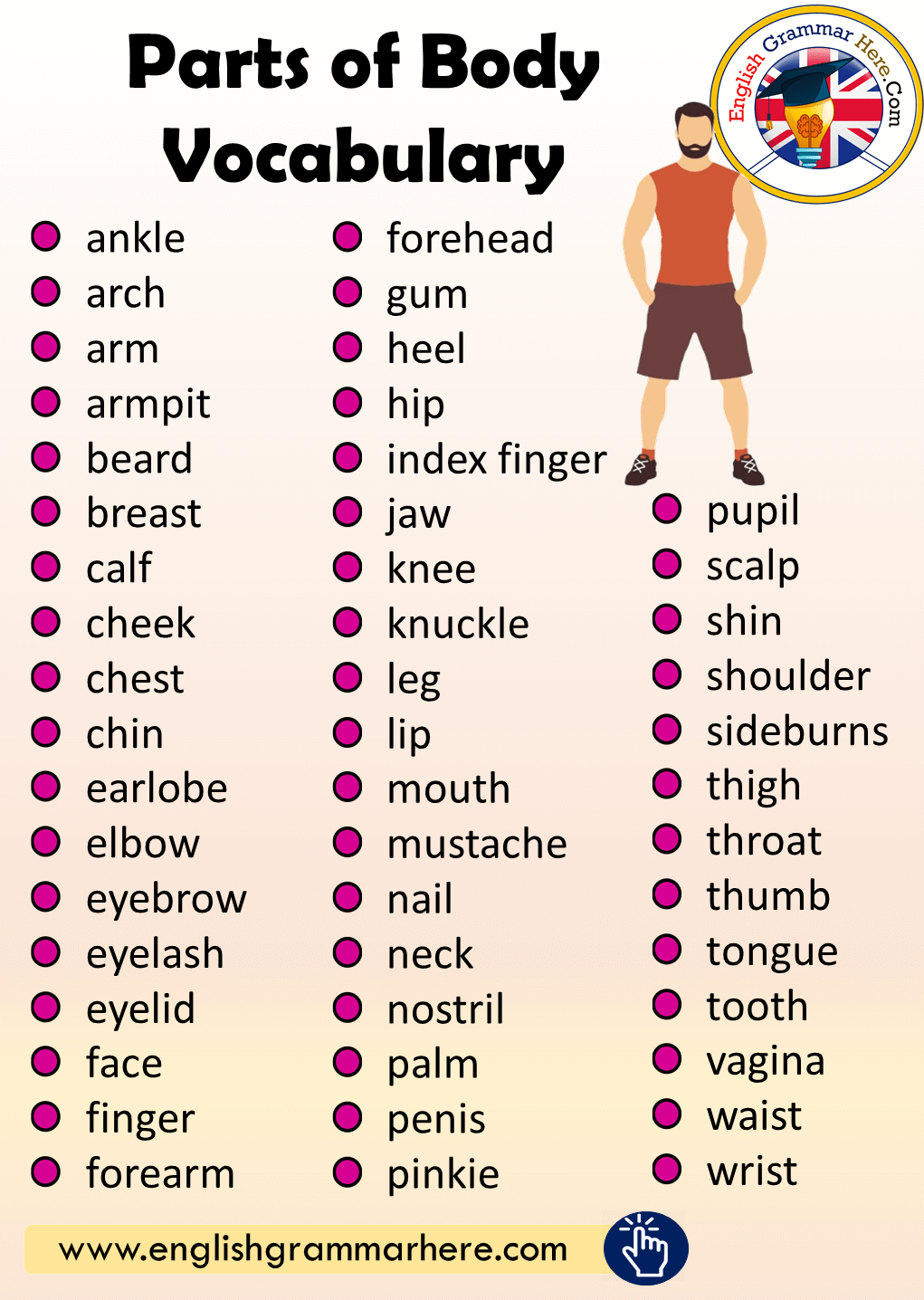
The vast majority of medical terms in English are derived from Latin and Greek. This allows for precise and universal communication among healthcare professionals globally.
- Cardiology: ‘Cardio’ (Greek for ‘heart’) + ‘logy’ (Greek for ‘study of’) = the study of the heart.
- Neurology: ‘Neuro’ (Greek for ‘nerve’) + ‘logy’ (Greek for ‘study of’) = the study of the nervous system.
- Osteoporosis: ‘Osteo’ (Greek for ‘bone’) + ‘porosis’ (Greek for ‘porousness’) = a condition characterized by porous bones.
- Hypertension: ‘Hyper’ (Greek for ‘above’) + ‘tension’ (Latin for ‘pressure’) = high blood pressure.
By understanding these roots, someone encountering ‘gastritis’ can infer it relates to the stomach (‘gaster’ – Greek for stomach) and inflammation (‘-itis’ – Greek suffix for inflammation). This predictive power is invaluable for medical students and anyone navigating health information.
Case Study 2: Scientific Nomenclature
Similarly, scientific classification and description rely heavily on Latin and Greek. The binomial nomenclature system, for instance, uses Latinized scientific names for species.
- *Homo sapiens*: ‘Homo’ (Latin for ‘man’) + ‘sapiens’ (Latin for ‘wise’) = wise man.
- *Canis lupus*: ‘Canis’ (Latin for ‘dog’) + ‘lupus’ (Latin for ‘wolf’) = wolf-dog (grey wolf).
Furthermore, scientific concepts often have clear etymological origins:
- Astronomy: ‘Astro’ (Greek for ‘star’) + ‘nomos’ (Greek for ‘law’ or ‘order’) = the study of celestial order.
- Geology: ‘Geo’ (Greek for ‘earth’) + ‘logy’ (Greek for ‘study of’) = the study of the Earth.
- Thermodynamics: ‘Thermo’ (Greek for ‘heat’) + ‘dynamics’ (Greek for ‘power’) = the study of heat and its relation to other forms of energy.
The universality of these roots ensures that scientific discoveries and concepts can be communicated across linguistic barriers, fostering global collaboration and understanding.
Strategies for Harnessing the Power of Roots

Actively engaging with Latin and Greek roots can significantly enhance vocabulary acquisition and comprehension. Here are some effective strategies:
- Invest in a Good Etymology Dictionary: Dictionaries that focus on word origins can be invaluable resources.
- Focus on High-Frequency Roots: Start with the most common roots, as they appear in a multitude of words.
- Create Flashcards: A classic but effective method. Write the root on one side and its meaning and example words on the other.
- Contextual Learning: When you encounter an unfamiliar word, try to break it down into its potential roots. Look up the word and its etymology.
- Engage with Academic Texts: Reading articles, journals, and books in your field of interest will expose you to a wealth of Latin and Greek-derived vocabulary.
- Play Word Games: Crossword puzzles, Scrabble, and vocabulary-building apps can often be enjoyed with an etymological twist.
- Connect the Dots: Notice how similar roots appear in different contexts. For example, the Latin root ‘spect’ (to look) appears in ‘inspect,’ ‘spectator,’ ‘perspective,’ and ‘conspicuous.’
While direct instruction in Latin and Greek is not always feasible, understanding the principles of their influence on English can be a powerful self-study tool.
A Foundation for Lifelong Learning
The building blocks of English, deeply embedded in the ancient languages of Latin and Greek, offer a profound and elegant pathway to mastering our lexicon. By recognizing and understanding these root words, prefixes, and suffixes, we gain the ability not only to decipher the meaning of unfamiliar words but also to appreciate the rich history and interconnectedness of language. This knowledge empowers us to become more confident communicators, more astute readers, and more insightful learners. In a world increasingly reliant on precise and nuanced language, embracing the legacy of Latin and Greek is not merely an academic exercise; it is an investment in our ability to understand, to articulate, and to thrive.